

Pilates for Osteoporosis: Strengthening Bones Safely
Bone loss throughout the lifetime is a natural part of aging. However, movement can play a major role in helping to keep your bones strong. Diagnoses such as osteoporosis and osteopenia may make people hesitant to exercise as these conditions can increase risk of fractures and affect long term mobility. Despite this concern, finding the right type of exercise can actually help to support your bone health and improve overall stability. While factors such as nutrition and genetics influence bone density, safe and appropriate exercise is one of the most powerful tools we have to support long-term bone health.
What is bone density and why does it matter?
Bone density refers to the strength and mineral content of the bone tissue. Bones are living structures that are constantly remodeled through a process in which old bone is broken down and new bone is formed in a continuous cycle to help maintain bone strength throughout our lives. However, as we age, the rate of bone breakdown can begin to exceed the rate of bone formation. Over time, this can lead to reduced bone density making bones more fragile and susceptible to fractures.
The effect of exercise on bone density:
So how exactly does exercise help to support bone health?
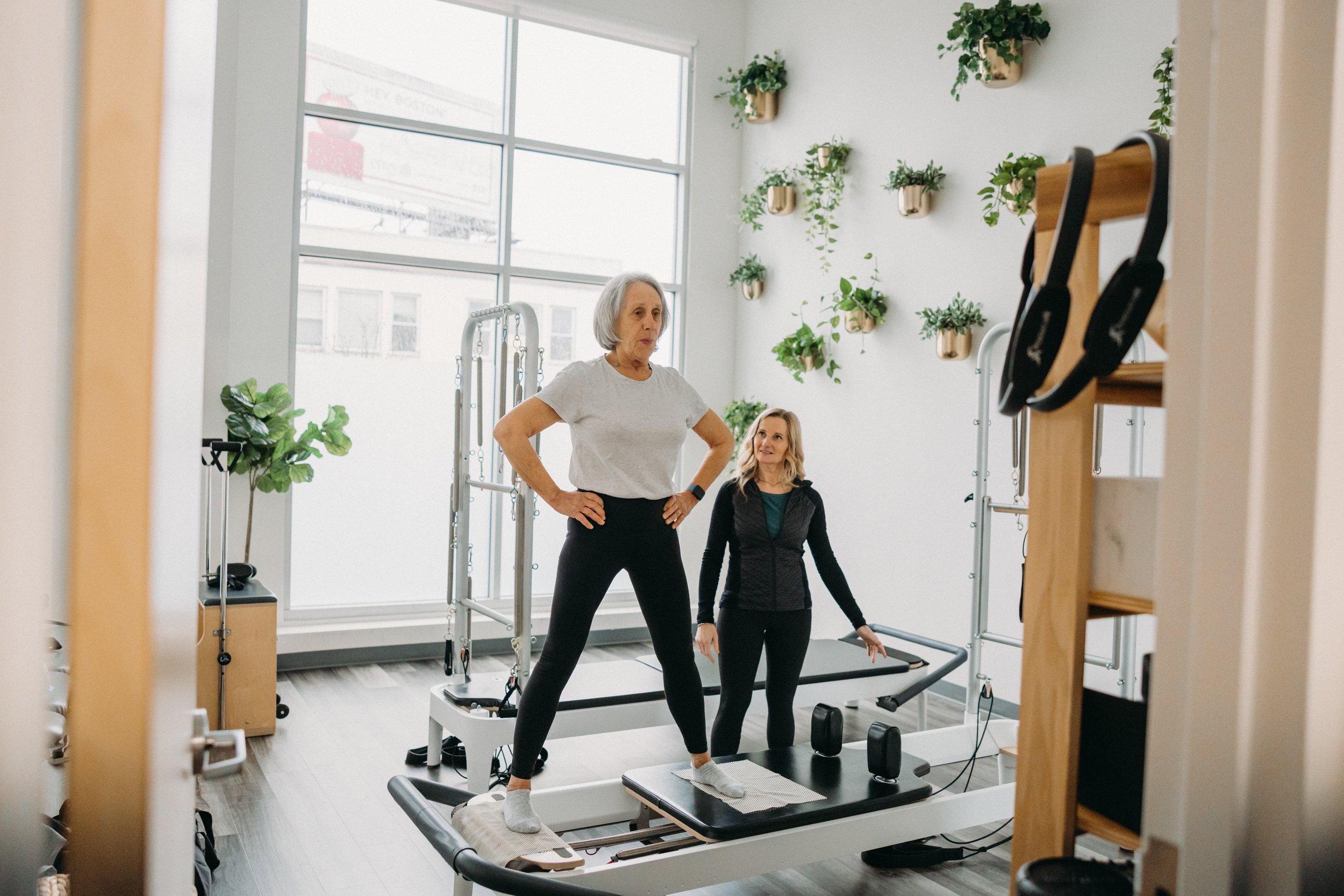
Bones respond to mechanical loading and resistance. When we perform weight-bearing activities or resistance exercises, stress is placed on bones. This stress stimulates bone-forming cells called osteoblasts, which help rebuild and strengthen bone tissue over time. With consistency and safe exercise it can help to slow the rate of bone loss and in some cases, improve bone strength. Pilates paired with strength training helps establish proper movement mechanics while progressively applying load to the bones in a safe way. Pilates helps to develop core stability, strengthen postural muscles, and body awareness which allows for a strong foundation for safe movement. Once body mechanics are established, resistance and weight bearing exercises can be added to safely apply load to the bones
Key things to consider when exercising with osteoporosis:
Avoiding certain movements:
For individuals with osteoporosis and osteopenia, certain movements may place strain on the spine and should be modified or avoided. These include end-range spinal flexion and rotation motions under load. Instead exercise programs should emphasize neutral spine positioning with controlled movements.
Core stability:
Strengthening the deep abdominal muscles helps to stabilize the spine. Spinal stabilization is especially important in those with osteopenia and osteoporosis as it will help protect the spine from fractures when we complete activities like lifting, bending, and reaching.
Strengthening the posterior chain:
The posterior chain includes muscles such as the glutes, hamstrings and spinal stabilizers in the back. Strengthening these muscles in a safe way is important as it will help to take excessive load off of the spine to further help and reduce risk of fracture
Preventing falls and practicing balance:
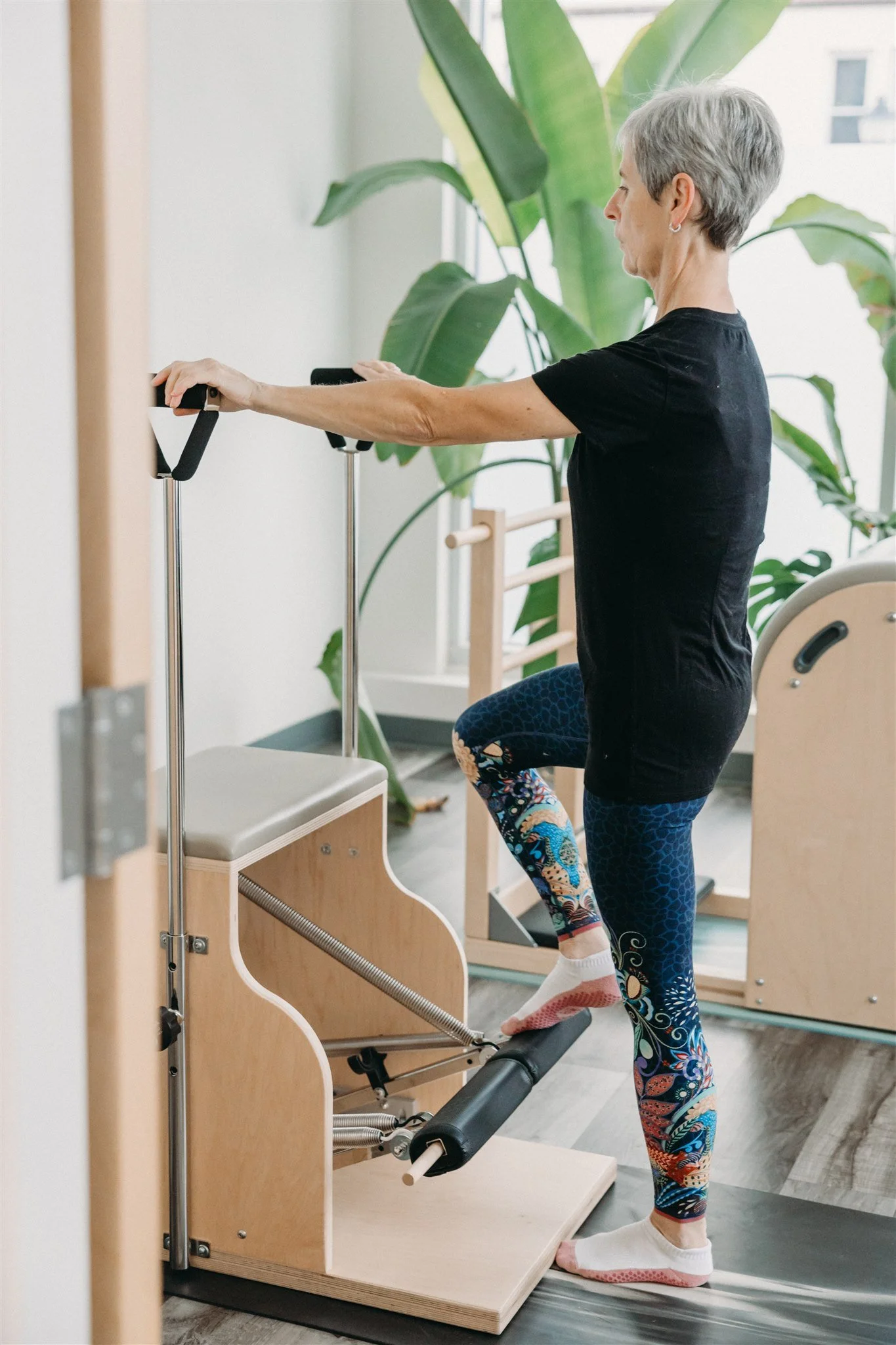
Falls are one of the leading causes of fractures in individuals with low bone density. For this reason, balance training is especially important for any osteoporosis exercise program. Pilates helps to improve proprioception, coordination and stability which helps to reduce fall risk and help individuals move with confidence.
Interested in learning how to exercise safely with osteoporosis?
Click here to set up a free discovery call!