
Biofeedback Therapy
The Pelvic Floor Connection
Seeing is Believing
Finding Your Rhythm: How Biofeedback and Pelvic Floor Therapy Conquer Constipation
If you are struggling with chronic constipation, you might feel like you have tried everything. From fiber supplements to laxatives, the endless cycle can be exhausting. But what if the key to relief isn't what you ingest, but how your muscles communicate?
Enter Pelvic Floor Physical Therapy (PFPT) and Biofeedback—the dynamic duo changing the game for bowel health.
You’re not alone—and you’re definitely not stuck.
At The Pilates RX, we specialize in combining Pelvic Floor Physical Therapy with targeted Biofeedback Therapy to help you regain coordination with bowel movements again. Our approach empowers you to move with confidence, improve performance, and feel truly supported in your body again.
🌸 The Pelvic Floor Connection
Your pelvic floor is a hammock of muscles supporting your bladder and bowels. For an easy bowel movement, these muscles must relax. However, many people with chronic constipation experience "dyssynergic defecation." This means the muscles accidentally tighten instead of relaxing when you try to go. It is like hitting the gas and the brakes at the same time!
💪 The Power of Biofeedback: Seeing is Believing 👀
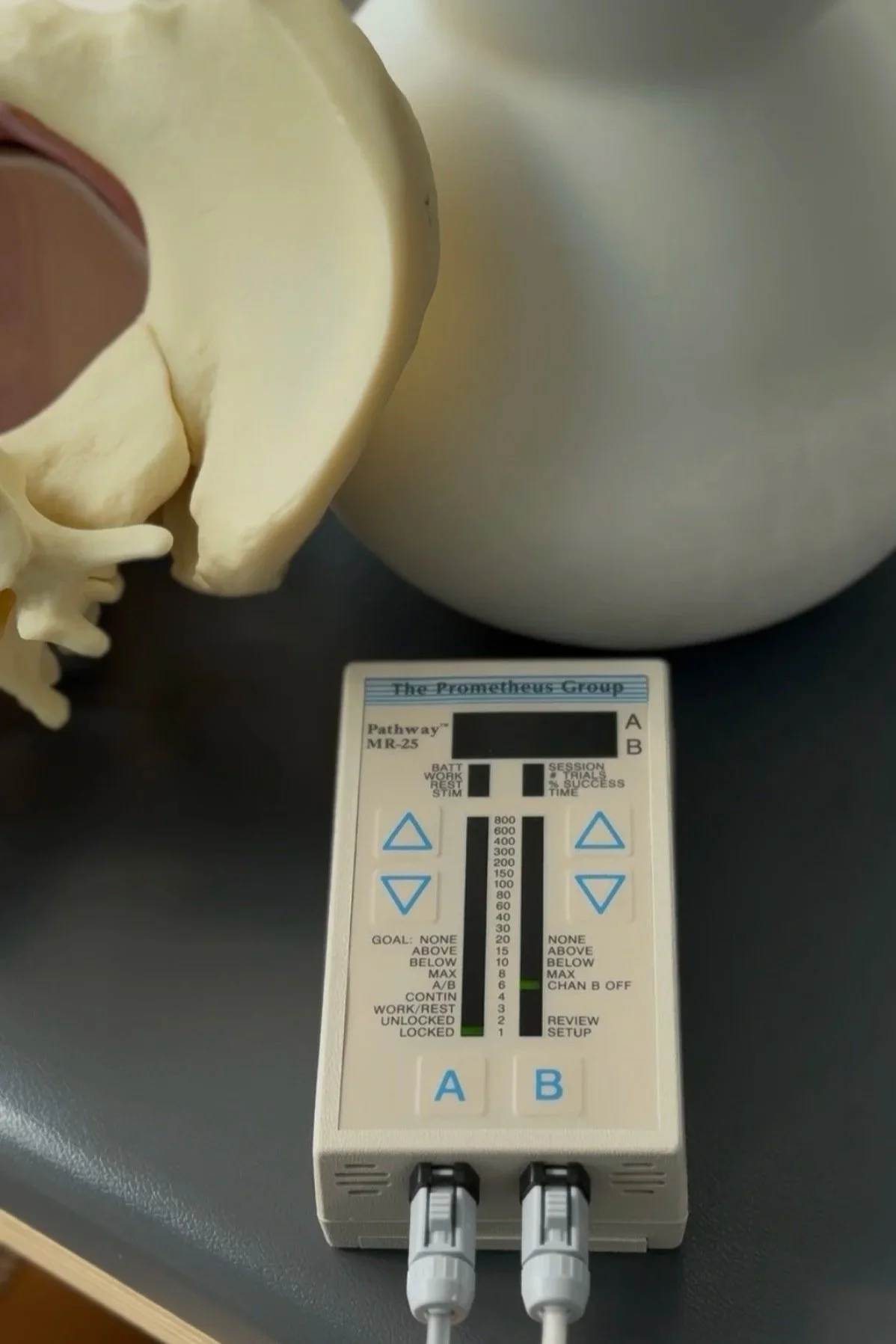
Biofeedback is a painless, specialized therapy that uses gentle sensors to show your muscle activity on a screen in real time.
The Benefits from Seeing:
Visual Rewards: You can watch your muscles tense and relax on a monitor.
Mind-Body Reconnection: It teaches you exactly how it feels to relax the right muscles.
No Guesswork: You learn to safely use your abdominal muscles to push without straining.
💬 "It relaxed a lot of the muscles that I didn't even know were tight. The biofeedback let me actually see how my body was working so I could finally learn how to 'let go' and coordinate my core and pelvic muscles."
✅ Backed by Science
This isn't just a trend—it is a gold-standard medical treatment.
High Success Rates: Clinical studies consistently show that biofeedback successfully treats up to 70% to 80% of patients with pelvic floor retraining needs, as noted in The Journal of Gastroenterology and Hepatology.
Long-Term Relief: Research demonstrates that biofeedback is significantly more effective than laxatives for long-term symptom relief, as outlined in landmark trials featured on PubMed.
Brain-Gut Reset: Studies confirm that visual retraining permanently fixes muscle coordination, reducing the need for lifetime medications, with findings published on PubMed Central.
💬"Biofeedback restored healthy bowel function for me. I’m no longer straining, I experience a complete evacuation, and I was able to stop relying on daily fiber supplements and laxatives just to pass a bowel movement."
🧠 How Biofeedback Helps Your Body Heal
Laxatives only offer a temporary fix by softening your stool or forcing your bowels to move. Biofeedback is different because it actually retrains the muscles and nerves that control your bowel movements. takes a holistic, body-wide approach to evaluate how your pelvic floor functions with your core, diaphragm, and hips.
Studies show that this therapy creates real, lasting changes in how your body functions. Here is exactly what it fixes:
Muscle Coordination: You will learn how to push down correctly with your stomach muscles while relaxing your pelvic floor and anal muscles at the same time.
Better Nerve Sensation: If you have trouble feeling when you need to go, biofeedback wakes up those nerves so you can clearly recognize that "full" feeling again.
Faster, Smoother Digestion: Medical tests prove that after this training, waste moves through your colon faster, your muscles stay relaxed when they are supposed to, and you can pass stool much more easily.
🏋️♀️ Ready to Regain Control?
A healthy pelvic floor is both strong and supple. Here are key exercises artistic athletes can practice under professional guidance:
🔹 Constipation is highly treatable, and you do not have to figure it out alone.
🔹 Pelvic Floor Biofeedback Therapy provides the tools and retraining needed to get your body back on track.
🔹At The Pilates RX, we believe everyone deserves to move freely and confidently. If you’re experiencing abdominal discomfort from chronic constipation and bloating consult our Specialized Pelvic Health Physical Therapist. Your power begins at your core — let it support you from within.
Learn more here and book a free discovery call with us today to discuss your unique symptoms.