

Why Balance Training Matters More as you Age
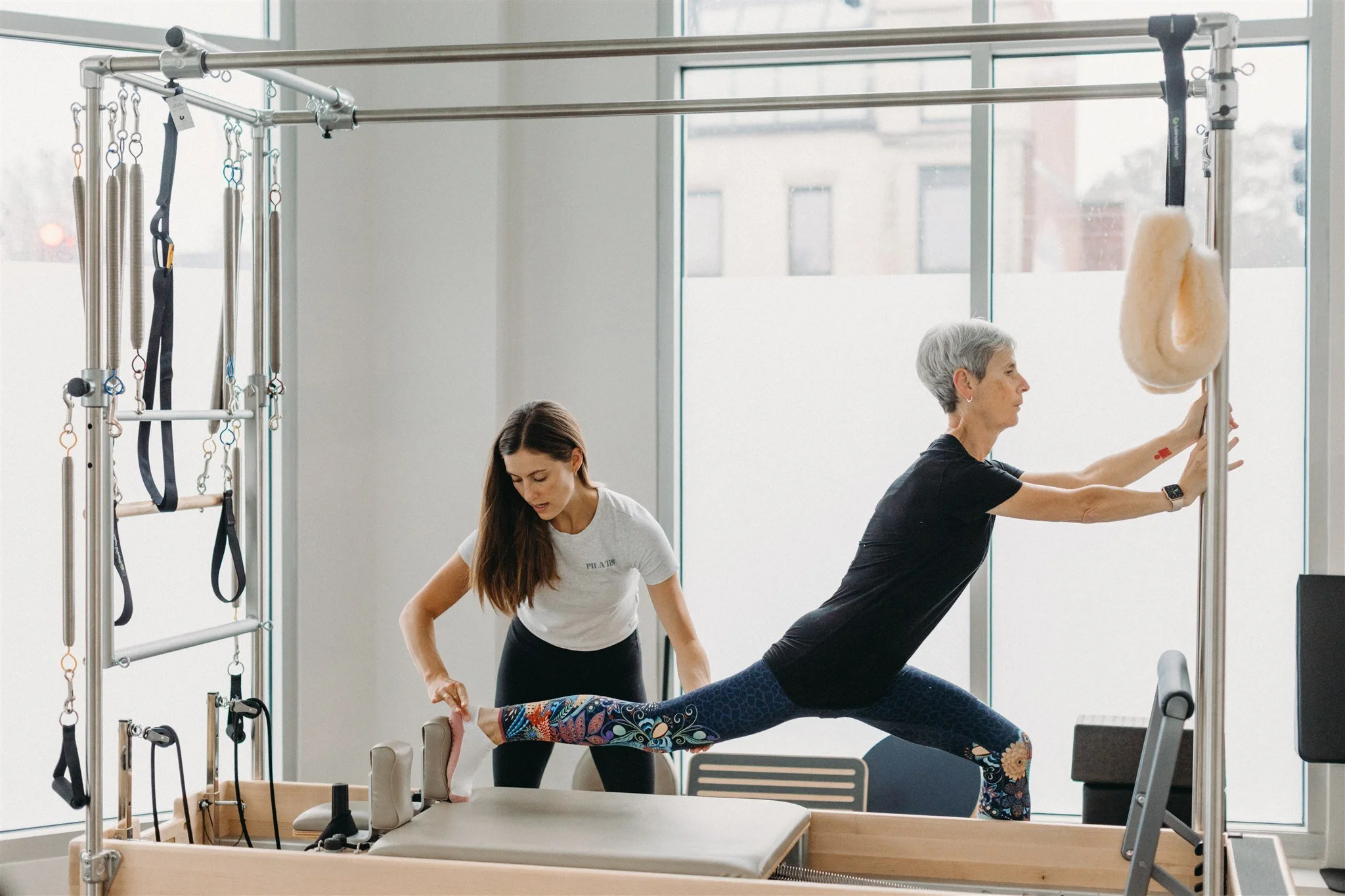
Balance is not a fixed trait that you either have or don't have, it's actually a trainable skill and like any skill it responds to practice and fades with neglect. More than one in four older adults reports experiencing a fall each year, and falls are the leading cause of injury related death among adults 65 and older. The age adjusted fall death rate actually increased by 21% between 2018 and 2024 which means this is a growing problem not just a shrinking one!
What many people do not know is that falls are not an inevitable consequence of aging. Researchers who study this are explicit about it. We do decline in certain areas as we age, but there is a great deal we can do to minimize fall risk, and balance training is at the center of that.
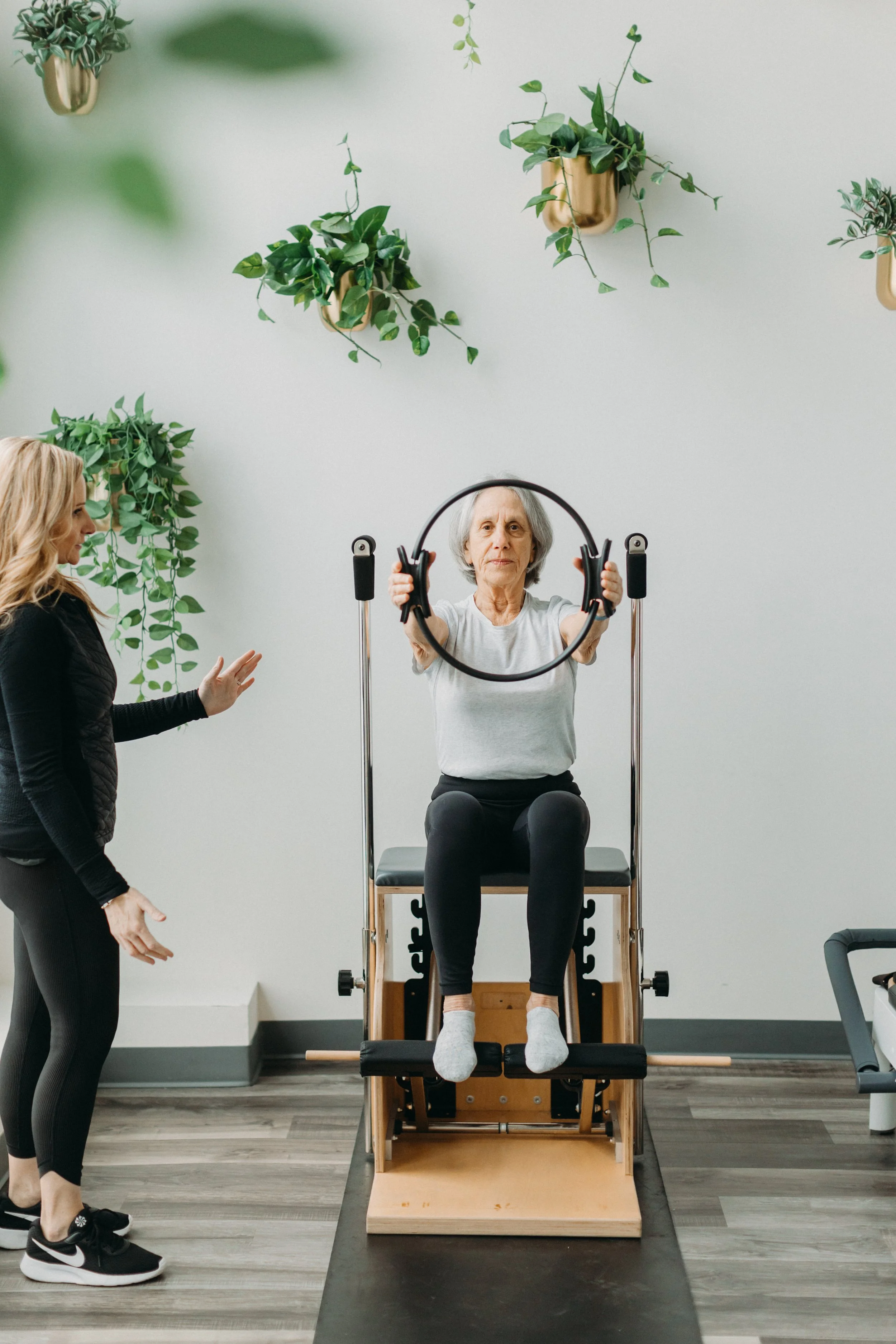
Why does balance decline in the first place?
Balance feels automatic, but it's actually the product of several systems working together in the background. Standing upright without thinking about it requires your brain to constantly integrate signals from your eyes, your inner ear, and the sensors in your muscles and joints. Your central nervous system blends all of that input and tells your muscles how to respond, moment to moment, to keep you from falling.
Over time, aging can chip away at each of those systems:
Proprioception dulls: This is your body's sense of where it is in space, and it's arguably the most important contributor to balance. Research shows all age groups rely more on proprioception than on vision to maintain balance, so when proprioception fades, balance suffers. The decline happens partly through changes in muscle spindle function, and partly because aging brings deficits in how the nervous system processes sensory input, including declining nerve conduction velocity.
Muscle strength and power drop: Natural aging is accompanied by declines in muscle strength and power alongside decreases in postural control. Notably, it's not just raw strength but power, the ability to produce force quickly, that matters here. When you start to stumble, you have a fraction of a second to react, and that reaction depends on fast force production.
The vestibular system weakens: The inner-ear system that senses head position and motion also degrades with age, adding to postural instability.
Pilates & Balance:
Pilates naturally trains strength and balance together, with a heavy emphasis on the deep core and trunk control that supports postural stability. It also lends itself to progressive challenges: we can adjust the base of support, the surface, the load, and the complexity to keep your nervous system working at that productive edge the research calls for.
And the evidence backs it up specifically. A meta-analysis of randomized controlled trials found an overall effect favoring Pilates for improving postural balance in older adults, concluding that a Pilates program can be considered an effective form of exercise to improve balance in this population. One 12-week randomized controlled trial found positive effects on functional mobility, postural balance, and gait, and suggested that a Pilates program with supplementary home exercises may reduce fall risk in older adults. Beyond the physical measures, some studies have also found improvements in balance confidence and reduced fear of falling, which matters enormously, because fear of falling itself leads people to move less, which accelerates the very decline you might be afraid of!
Resources:
CDC. Older Adult Falls Data. Older Adult Fall Prevention. March 11, 2026. https://www.cdc.gov/falls/data-research/index.html
Miller NS. Accidental falls in the older adult population: What academic research shows. The Journalist’s Resource. August 28, 2024. https://journalistsresource.org/health/accidental-falls-in-the-older-adult-population-what-academic-research-shows/
Ha PL, Peters WB, McGeehan MA, Dalton BH. Age-related reduction in peak power and increased postural displacement variability are related to enhanced vestibular-evoked balance responses in females. Experimental Gerontology. 2022;160:111670. doi:10.1016/j.exger.2021.111670
Wagner AR, Akinsola O, Chaudhari AMW, Bigelow KE, Merfeld DM. Measuring Vestibular Contributions to Age-Related Balance Impairment: A Review. Front Neurol. 2021;12:635305. doi:10.3389/fneur.2021.635305
Casonatto J, Yamacita CM. Pilates exercise and postural balance in older adults: A systematic review and meta-analysis of randomized controlled trials. Complement Ther Med. 2020;48:102232. doi:10.1016/j.ctim.2019.102232
Meikis L, Wicker P, Donath L. Effects of Pilates Training on Physiological and Psychological Health Parameters in Healthy Older Adults and in Older Adults With Clinical Conditions Over 55 Years: A Meta-Analytical Review. Front Neurol. 2021;12:724218. doi:10.3389/fneur.2021.724218
Interested in learning more?
Click here to set up a free discovery call!